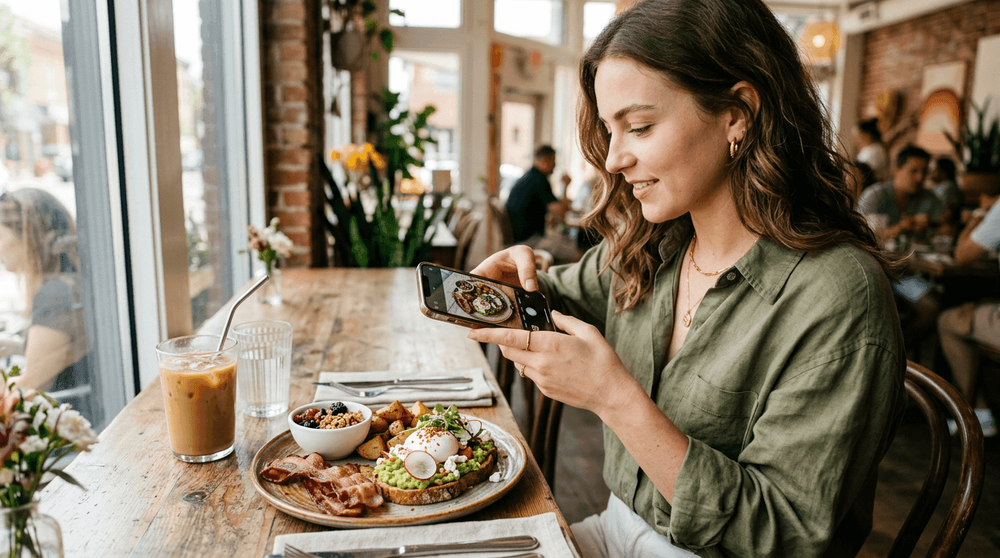
Why Social Media Is Non-Negotiable for Restaurants in 2026
Let's start with a reality check: 75% of consumers have chosen a restaurant based on social media photos (Zagat Survey). In 2026, your Instagram feed is your second storefront — and for many customers, it's the first one they see.
But here's the problem most restaurant owners face: you're busy running a restaurant. You don't have time to shoot content, write captions, research hashtags, and stay on top of algorithm changes. The result? Inconsistent posting, generic content, and missed opportunities.
This playbook gives you a systematic approach to restaurant social media that actually works — without consuming all your time.
Platform Strategy: Where to Focus
Instagram — Your Digital Storefront
Why it matters: Instagram is still the #1 platform for restaurant discovery. 67% of millennials say they've visited a restaurant after seeing it on Instagram.
Content mix:
- 40% food photos and plating videos
- 25% behind-the-scenes and staff content
- 20% user-generated content (reposts)
- 15% specials, events, and announcements
Key features to use:
- Reels — 2x reach vs. standard posts, algorithm priority
- Stories — Daily updates, polls, countdowns for specials
- Highlights — Organized menu, reviews, ambiance showcase
- Location tags — Essential for local discovery
TikTok — Your Viral Growth Engine
Why it matters: Food is TikTok's most popular content category. 36% of TikTok users have visited a restaurant after seeing it on the platform (TikTok For Business).
Content that goes viral:
- Chef's knife skills and plating techniques
- "Making our most popular dish" process videos
- Customer reaction videos
- Day-in-the-life of a restaurant owner
- Food ASMR (sizzling, crunching, pouring)
TikTok tips:
- Post during lunch (11am-1pm) and dinner (5-7pm) hours
- Use trending sounds but make them food-relevant
- First 3 seconds determine whether people watch — lead with the most visually appealing moment
The Content Creation System
Step 1: Build a Content Bank
Dedicate 30 minutes twice a week to capture raw content:
- Monday: Shoot 10-15 dish photos during prep
- Thursday: Record 3-5 short videos during service
- Always: Encourage staff to capture candid moments
This gives you 15-20 content pieces per week — more than enough for daily posting.
Step 2: Use the 4-Part Caption Formula
Every restaurant social media caption should follow this structure:
- Hook — Stop the scroll in the first line
- Story — Connect emotionally with the food/experience
- Details — Dish name, ingredients, availability
- CTA — Tell them what to do next
Example:
🔥 This isn't just a burger. (Hook)
Our pitmaster smokes the brisket for 14 hours before hand-pulling it onto a brioche bun with house-made pickles and smoked gouda. Every bite is two days in the making. (Story)
The Smokehouse Burger — available Thursday through Sunday, while supplies last. (Details)
Tag someone who needs this in their life. Link in bio to reserve your table. (CTA)
Step 3: Leverage User-Generated Content (UGC)
UGC is the holy grail of restaurant social media: it gets 6.9x more engagement than brand content (Stackla).
How to collect UGC systematically:
- Place QR codes on tables that prompt customers to share their experience
- Create an Instagram-worthy "photo moment" in your restaurant
- Run a branded hashtag campaign
- Use tools like Vibpost to automatically generate social media content from customer experiences
How Vibpost helps: When customers scan your QR code and share their experience, Vibpost's AI automatically generates Instagram captions, TikTok scripts, and hashtag suggestions based on their feedback. You get authentic, customer-inspired content without writing a word.
Step 4: Use AI to Scale Content Production
AI tools can transform one customer interaction into multiple content pieces:
| Input | AI-Generated Output |
|---|---|
| Customer review: "Best tacos in the city" | Instagram caption + 5 hashtag suggestions |
| Customer photo of their meal | Instagram Story template with branded overlay |
| Customer feedback about ambiance | TikTok script: "What customers love about our space" |
| Positive review mentioning staff | Staff spotlight post celebrating the team member |
This multiplier effect means you never run out of authentic content.
Food Photography Tips for Social Media
You don't need professional equipment. A smartphone with good lighting produces excellent results.
Lighting Rules
- Natural light is king — shoot near windows when possible
- Never use flash — it kills the warmth and makes food look unappetizing
- Overcast days provide perfect diffused light
Composition Tips
- Overhead shots work best for flat dishes (pizza, salads, bowls)
- 45-degree angle works for dishes with height (burgers, stacked desserts)
- Close-ups for texture (grill marks, melted cheese, crunchy toppings)
- Include hands — a person reaching for food adds life and scale
Video Best Practices
- Show the process, not just the final dish
- Use slow motion for pours, drizzles, and steam
- Keep videos under 30 seconds for maximum engagement
- Add captions — 85% of social media video is watched without sound
Posting Schedule Template
| Day | TikTok | Content Type | |
|---|---|---|---|
| Monday | Feed post | - | Weekly special announcement |
| Tuesday | Story | TikTok | Behind-the-scenes prep |
| Wednesday | Reel | TikTok | Food process video |
| Thursday | Feed post | - | Customer UGC repost |
| Friday | Reel + Story | TikTok | Weekend specials + ambiance |
| Saturday | Story | TikTok | Busy night energy/live clips |
| Sunday | Feed post | - | Staff spotlight or review highlight |
Measuring Success
Track these metrics monthly:
- Engagement rate: Likes + comments + saves ÷ followers (target: 3-6%)
- Reach growth: Month-over-month increase in unique accounts reached
- Save rate: High saves = content people want to come back to (target: 2%+)
- Profile visits to website clicks: How many visitors convert to your website
- DM inquiries: Reservations and questions through social media
The Bottom Line
Restaurant social media marketing doesn't have to be overwhelming. With a systematic approach — regular content capture, AI-assisted writing, UGC collection, and a consistent posting schedule — you can build a social presence that drives real foot traffic.
Start with one platform, post consistently for 30 days, and measure results. Then expand. The restaurants that win on social media aren't the ones with the biggest budgets — they're the ones that show up consistently with authentic, appetizing content.